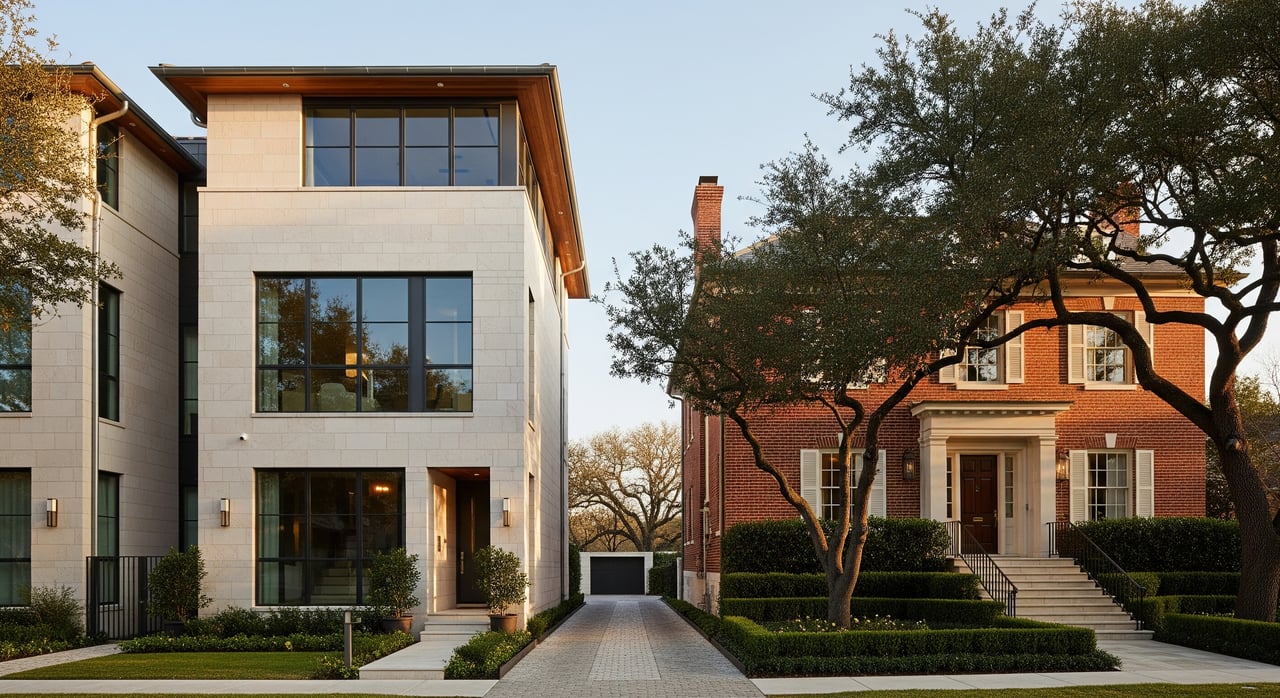
Should you buy a townhome or a single-family home in Dallas? It is a big decision, and the right choice comes down to how you want to live, what you want to maintain, and how you plan to finance and resell. You are not alone if you are weighing yard space against HOA dues or worrying about noise and parking.
In this guide, you will learn the key differences in ownership, HOAs, maintenance, insurance, costs, and financing, plus how these play out in Dallas neighborhoods. You will also get a simple checklist and a document list to review before you make an offer. Let’s dive in.
Ownership basics
Understanding what you actually own is step one.
- Townhomes: In Texas, many Dallas townhomes are fee simple, which means you own the unit itself. You will often share walls and common areas that sit under recorded CC&Rs and an HOA. Some townhome projects are set up as condominium regimes, which changes insurance and lender treatment. Always verify the legal structure on the deed and plat.
- Single-family homes: These are typically fee simple on a private lot. Some Dallas neighborhoods also have HOAs with rules and modest dues. Check the subdivision documents to be sure.
Bottom line: Confirm the deed type, plat, and any CC&Rs so you know your rights and duties before you write an offer.
HOAs and rules
If there is an HOA, the rules matter just as much as the floor plan.
- Governance and disclosures: Texas Property Code Chapter 209 sets HOA disclosure and resale certificate requirements. As a buyer, request the governing documents and the resale certificate early so you can review rules, fees, budgets, and any policy changes.
- What to ask for: CC&Rs, bylaws, rules and regulations, current budget, reserve study, recent HOA meeting minutes, master insurance policy, and the resale certificate showing dues, fees, and delinquencies.
- Restrictions to check: Rental limits, short-term rental policies, parking rules, pet policies, exterior change approvals, and any architectural standards.
These documents tell you how the community operates today and what costs could rise tomorrow.
Costs and insurance
Your monthly cost is more than principal and interest. Plan for the full picture.
- Purchase price and dues: Townhomes often list lower than similar single-family homes because the lot is smaller, but townhomes usually carry monthly HOA dues. Many single-family homes have no HOA dues or lower dues.
- Taxes: Dallas County property taxes are a major line item. Smaller lots can reduce land value on a townhome, but always check the Dallas Central Appraisal District valuation for the actual property.
- Maintenance: Townhomes often shift exterior items like landscaping, private streets, or gate maintenance to the HOA, which you pay through dues. Single-family homes put most exterior costs on you.
- Insurance differences: In a single-family home, you carry a standard homeowners policy for the structure. In a townhome, coverage depends on the HOA’s master policy. Some master policies cover the shell and common areas and leave you to insure the interior. Others are “bare walls,” which can leave more structural coverage on you. Ask for the master policy and confirm what it covers.
- Local risks to consider: Dallas sees hail and wind events. Verify those coverages and check flood risk. Flood insurance is separate from a standard policy and may be lender-required in mapped flood zones.
Knowing which party insures the roof and walls prevents coverage gaps and surprises at renewal.
Financing and appraisal
Loan type and project setup can affect timelines and approvals.
- Loan treatment: If a townhome is fee simple and not part of a condominium regime, lenders often treat it like a single-family home. If it is part of a condominium project, FHA or VA loans may require project approval.
- Appraisal: Townhome comps can be tighter and more price-per-square-foot driven. Single-family appraisals put more weight on lot size, location, and recent neighborhood sales.
- Action step: Have your lender confirm whether the property is considered a condo project. This can change documentation needs and affect FHA or VA options.
Clarity upfront keeps your loan and appraisal on track.
Lifestyle trade-offs in Dallas
Think about how you plan to live in the space day to day.
- Maintenance and time: Townhomes reduce exterior chores. Many include HOA-managed landscaping or private street upkeep. Single-family homes demand more yard and exterior work but offer control and room to add features.
- Privacy and noise: Shared walls in townhomes can bring more noise exposure. Ask about party wall construction and sound insulation. Single-family homes usually offer more separation and yard buffers.
- Parking: Many Dallas townhomes include one or two-car garages and may limit guest parking under HOA rules. Single-family homes often provide a driveway, garage, and more flexible street parking, subject to local rules.
- Accessibility: Dallas townhomes are often multi-level. If you prefer single-level living or need step-free access, a single-story home may be a better fit.
Match the floor plan and setting to your daily routine, pets, and hobbies.
Where you will find each
Dallas location patterns can point your search in the right direction.
- Townhome clusters: You will see more townhome options near core urban areas with infill development, including Uptown, Oak Lawn, Deep Ellum and nearby East Side pockets, Lower Greenville, Knox-Henderson, Bishop Arts and inner Oak Cliff, and parts of East Dallas such as Lakewood Heights infill. These spots trade yard space for proximity to dining, retail, and shorter commutes.
- Single-family strongholds: Larger single-family options are common across North Dallas and Far North Dallas, Preston Hollow, Lakewood, Lake Highlands, Bluffview, and many Oak Cliff neighborhoods. These areas lean toward established streets and larger lots.
If walkability and quick access to urban nodes matter most, a townhome corridor may fit. If a yard and expansion potential top your list, focus on single-family neighborhoods.
Resale and long-term value
How each type performs over time depends on land and location.
- Land value: Single-family homes include larger lots that can support appreciation in many markets. Lot size and neighborhood comparables weigh heavily on value.
- Urban demand: Townhomes can outpace single-family homes in high-demand urban areas where buyers prioritize location and low maintenance. The key is neighborhood strength and long-term demand drivers.
- Local variables: School zones, commute times, and new development corridors can shape appreciation for both types in Dallas. Verify your assumptions with recent, neighborhood-level comps.
Plan for today’s lifestyle and tomorrow’s resale options.
Townhome or single-family? Quick guide
Choose a townhome if you want:
- Lower exterior maintenance and smaller yards.
- Proximity to dining, retail, and inner-city commutes.
- HOA-managed common areas and predictable exterior care.
- A multi-level layout and lock-and-leave feel.
Choose a single-family home if you want:
- A private yard for pets, gardening, or future additions.
- More privacy, space between neighbors, and flexible parking.
- Fewer HOA rules on exterior choices.
- One-level options and easier accessibility.
Decision checklist
Ask yourself:
- How important is private yard space and outdoor living?
- Do you prefer minimal exterior chores or more control over the exterior?
- Are you comfortable with HOA rules about rentals, parking, pets, and design changes?
- Do you need a single-level layout or quiet spaces for work?
- What is your real monthly budget including loan payment, HOA dues, taxes, insurance, and routine maintenance?
- Do you plan to rent the property now or later, and do the HOA and city rules allow it?
- How will your lender treat the property for financing and underwriting?
- How important is resale flexibility tied to lot size, neighborhood, and school zone boundaries?
What to review before you offer
Get these items in hand early so you can make a confident decision.
- Legal and title: Recorded deed and plat, legal description, title commitment, and a current survey.
- Seller documents: Seller’s disclosure and any recent repair records.
- HOA package for townhomes or HOA-governed homes:
- CC&Rs, bylaws, and rules and regulations.
- Current budget and reserve study.
- HOA meeting minutes from the past 12 to 24 months.
- Resale certificate and any estoppel that shows dues, fees, and delinquencies.
- History of special assessments during the past 5 years.
- HOA master insurance policy and a written outline of coverage limits.
- Condo items if applicable: Condo questionnaire and FHA or VA approval status if using those loans.
- Inspections: General home inspection plus focused checks for foundation, roof, HVAC, and pests. For attached homes, add party wall, fire separation, and exterior cladding reviews.
- Risk and zoning: FEMA flood zone information and any elevation data available. Review City of Dallas zoning or PD overlays and permits if you plan changes.
A clean document set reduces surprises during escrow and after closing.
Next steps
If you are on the fence, preview one or two townhome communities in an urban corridor and a few single-family streets in the same price band. Pay attention to noise, light, parking, drive times, and how the floor plan feels. Then have your lender confirm how a target property will be underwritten, and request the HOA package early when you get serious on a specific townhome.
When you are ready to compare options side by side, reach out to a local advisor who knows both product types across Dallas. You will get clarity faster and avoid dead ends.
Ready to weigh your choices and tour the right neighborhoods? Connect with the team at Integrity Plus Realty for a straightforward plan that fits your lifestyle and budget.
FAQs
What is the main ownership difference in Dallas?
- Many Dallas townhomes are fee simple but include shared elements under an HOA, while most single-family homes are fee simple on a private lot with fewer shared obligations.
How do HOA dues affect total cost?
- Townhomes often have monthly HOA dues that cover common areas and sometimes exterior items, which can offset a lower list price compared with a single-family home.
What insurance do I need for a townhome?
- It depends on the HOA’s master policy. If the master policy covers the building shell, you may need interior and loss assessment coverage. If it is bare walls, you may need more structural coverage.
Can I use FHA or VA for a townhome?
- Yes, if the townhome is fee simple and not part of a condo project, lenders often treat it like a single-family home. If it is a condo regime, the project may need FHA or VA approval.
Where are townhomes most common in Dallas?
- You will find clusters near urban cores, including Uptown, Oak Lawn, Lower Greenville, Knox-Henderson, Deep Ellum and nearby East Side pockets, Bishop Arts, and parts of East Dallas.
What documents should I review before buying in an HOA?
- Review the CC&Rs, bylaws, rules and regulations, current budget, reserve study, recent meeting minutes, resale certificate, assessment history, and the HOA’s master insurance policy.